The Sings of Radicalisation
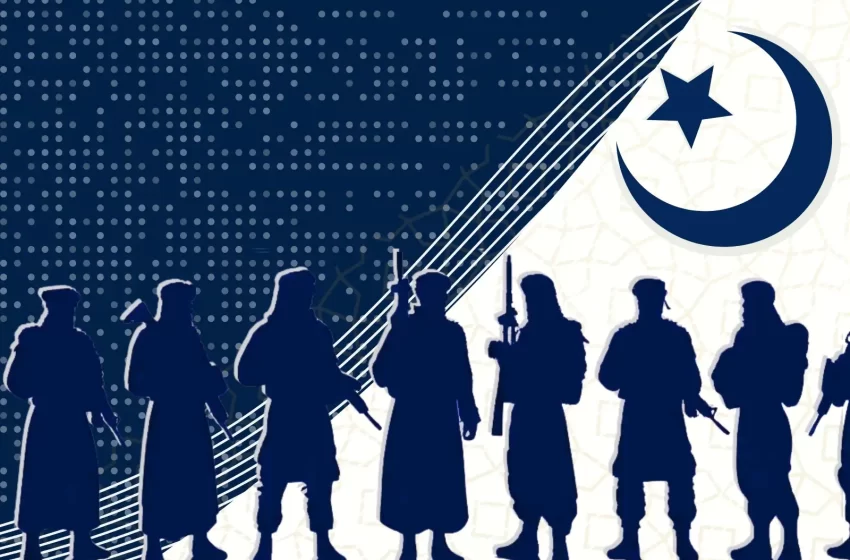
Asserting that all members of Muslim society are radicalised is a significant exaggeration. However, it is important to investigate the reasons behind this perception and distinguish between mainstream beliefs and extremist views.
The Quran addresses humanity directly as “O Humankind” on 306 occasions and indirectly more than two thousand times throughout its over 6,000 verses. By comparison, the term “Muslim” appears only 39 times within the text.
Throughout the 19th century, Islam became politicised by Muslim rulers to advance their own political power and by religious communities to exploit it for religious dominance. Both powerful elites corrupted the minds of the general population by promoting political Islam, which was spread through mosques and madrasahs. While Sayyid Qutb and Sayyid Abul A’la Mawdudi established the foundational concepts for an Islamist revival, Dr. Abdullah Azzam, a Palestinian scholar with a doctorate in Islamic jurisprudence from Al-Azhar University, played a significant role in disseminating these ideas throughout the Arab world.
We can see how political Islam has harmed more Muslims than non-Muslims in Islamic states by spreading disinformation that non-Muslims seek to harm Islam, as well as instilling fear that Islamic culture is disappearing within their own Ummah. The artificial, man-made concept of religious power and Islamic dominance has instilled in ordinary Muslims a desire to assert supremacy over other religions by promoting and implementing Sharia or by engaging in jihad (religiously motivated violence) across both Muslim and non-Muslim states.
The concept of jihad was misused among Muslims to promote religious violence by drawing selective justification from Islamic texts, redefining it as a personal obligation (fard ‘ayn) for all Muslims, and thereby inspiring scores of individuals to join religious-cum-political jihad against Western powers and Muslim states, at both organisational and individual levels.
Western powers have at times misinterpreted the concept of Jihad, which has contributed to significant policy setbacks, such as their support for Islamist combatants in Afghanistan during the 1980s conflict with the Soviet Union. Western powers unintentionally promoted Islamist ideology to counter communism across the region, thereby breathing life into the monster of political Islam.
Islam, once widely regarded for its traditions of tolerance, is argued by some critics to have been reshaped in certain contexts by politicised interpretations that emphasise militancy. While many Muslims continue to uphold humanitarian values, some Islamist movements promote a vision of ideological dominance on a global scale. Islam, once widely recognised for its traditions of tolerance, is argued by some critics to have been reshaped in certain contexts by politicised interpretations that emphasise militancy. While many Muslims continue to uphold humanitarian and pluralistic values, certain Islamist movements promote a vision of ideological dominance on a global scale. The “religious card” is being used in social, political, electoral and religious arenas nationally and internationally.
There are scores of political, social and religious beliefs that trigger an individual to become a potential Islamist and these beliefs are deeply rooted in society. It’s important to understand that anyone, religious or secular, can easily be drawn into the fantasy ideology of Islamism by following such ideological beliefs.
These beliefs are classified across various political, social, and religious categories in a manner that enables individuals to adopt them with confidence and autonomy, often without being aware of potential risks involved. These ideological tools are not only religious or political but also socially embedded, enabling individuals to pursue dominance within their respective spheres political, religious, or social.
If an individual Muslim is involved in one of the below actions or believes in ideologies or considers them legitimate, they are radicalized and possess extreme religious views.
The Signs of Radicalisation/Religious Extremism
- Believing Jews and Hindus are enemies of Islam
- Believing Western world is against Islam
- Hate Israel and India (based on religious grounds)
- Hate any Western country (based on religious grounds)
- Convert as many non-Muslims as possible
- Convert girls into Islam
- Consider blasphemers are liable to harsh punishment (Death)
- Consider apostates are liable to extreme punishment (Death)
- Considering LGBTQ as disbelievers or liable to harsh punishment (Death)
- Believing that all people will go to hell except Muslims
- Believing that Islam will dominate the entire world
- Believing in a worldwide Caliphate
- Believing that Islam is superior/better than any other religion
- Believing in implementation of Blasphemy Law
- Conduct violent protests against artists
- Believe in implementing Sharia Law (forcefully and against the will of people)
- Calling Muslims Kafir (infidel), Murtad (apostate) or disbeliever
- Considering anyone or any group or any sect as infidel/apostate (based on religious grounds)
- Harming civilians on religious grounds
- Enjoying the pain of non-Muslims
- Using mosques (sermons) or Madrasah (teaching) against particular Muslims or Non-Muslims (particular or all) or against particular countries
- Teaching or promoting or propagating or spreading disinformation against individuals or groups or states (Muslim or Non-Muslim) on religious grounds
- Judging anyone on religious grounds
- Assessing anyone or any group through religious angle
- Stopping Non-Muslims from preaching
- Stopping non-Muslims from practising their religion
- Stopping the building of non-Muslims places of worship
- Teaching Islam to non -Muslims in educational institution as a condition of attendance or graduating (providing knowledge of all religions is permissible)
- Attacking, demolishing or damaging places of worship
- Believing that wearing the burqa (covering women from head to toe) should be compulsory
- Preventing girls from education
- Believing that women are property
- Believing that women cannot lead nations (become leader of the state) and should be prevented from doing so
- Harming people because of a difference of religious opinion
- Building religious places on illegal lands
- Hating people based on their “sins”
- Equating a belief in democracy with Kufr (disbelief)
- Conducting violent protests on any religious matters (locally or internationally)
- Considering adherents of other Islamic sects as on wrong path/direction/way of practicing religion
- Considering Muslim democratic leaders as Taghut (the one who does not rule by that which Allah has revealed)
- Violent action against the ruler
- Armed struggle against the ruler
- Supporting or celebrating terrorist attacks against non-Muslims
- Supporting or celebrating terrorist attacks in Muslim or non-Muslim states
- Supporting terrorism (on religious grounds)
- Supporting terrorist organisations
- Damaging, burning or attacking properties/transports/belongings (on religious grounds)
- Attacking army installations and government infrastructure (on religious grounds)
- Collecting Islamic charity in support of terrorism/extremism/Islamist groups, etc.
- Financing extremist/Islamist individuals and/or groups
These are the actions, beliefs, and ideologies that promote Islamism and generate religious hatred among Muslims toward other communities. These false Islamist ideologies should be addressed in accordance with Islamic teachings, of which most ordinary Muslims are unaware.
For example, there is not a single Islamic text that prescribes punishment for a person who commits blasphemy or leaves Islam and accepts another religion. However, in contemporary times, many Islamic countries have laws that impose the death penalty on those who leave Islam or who are accused of blaspheming the Prophet Muhammad or the religion of Islam. Most religious Muslims, and even some secular Muslims, still hope that one day an Islamic caliphate will be established to rule the entire world under Sharia law. The claim that all Muslims are obligated by Islam to work toward establishing a worldwide Islamic caliphate is false and has no basis in the Qur’an or the Prophetic traditions. It is a modern political ideology that relies on a distortion of the message of Prophet Muhammad.
A well-known Egyptian scholar, Naser Hamid Abu Abu Zayd made the note of the religious roots of Islamist Terrorism:
“if we follow the rule of interpretation developed from the classical ‘science of Quranic interpretation’, it is not possible to condemn terrorism in religious terms. It remains completely true to the classical rules in its evolution of sanctity for its own justification. This is where the secret of its theological strength lies.”
A Muslim should be a mercy to all, particularly to non-Muslims, and should not be a burden or a danger to them, as they represent Islam and their unlawful or extreme actions can generate hatred and resentment toward Islam. We should think and act beyond our religious emotions, seek true knowledge of our faith, and show unconditional respect for other religions. Religion does not teach harm against innocent lives, and we must understand this before it is too late.