The Fall of Aleppo
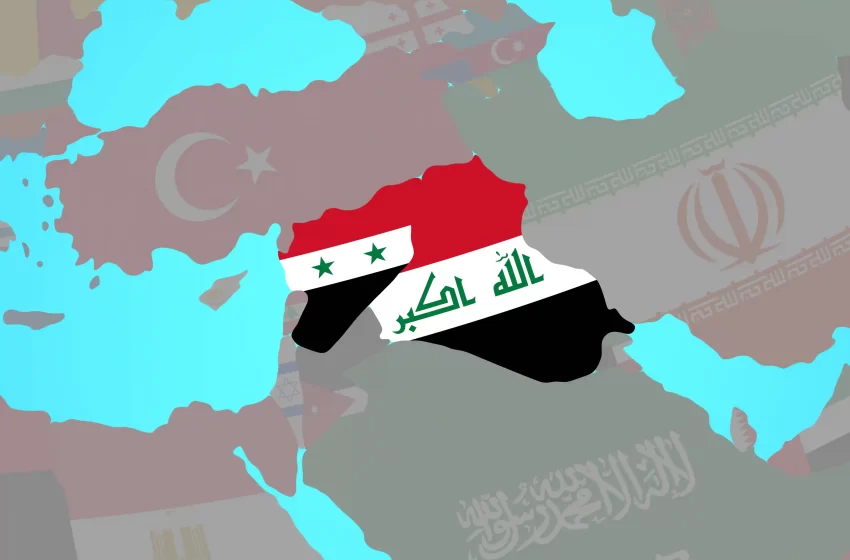
The rebels of Hayat Tahrir al-Sham and other allied Jihadist groups managed to take control of the city in less than 72 hours. Three key factions have played a significant role in the recent unexpected capture of large areas of Aleppo, a development I refer to as the ‘Anti Asad Triangle.’
- Jihadists (Hayat Tahrir al-Sham – HTS)
- Syrian Opposition Forces (Rebels)
- Kurdish-led Syrian Democratic Forces (SDF)
The so-called “Anti-Asad Triangle” has effectively compelled regime forces to withdraw. Although Russian military support included substantial air strikes against the Anti-Asad Triangle, reports indicate that Russian forces have since vacated their military checkpoints now under HST control as well as Aleppo International Airport. Additionally, it is reported that a military academy in Aleppo has been seized. HTS is the main active Jihadist group in the area, and it controls an enclave of around half of Idlib Province and parts of neighbouring Aleppo, Latakia, and Hama. The conflict drew the involvement of jihadist extremist groups, including al-Qaeda and the Islamic State, which subsequently emerged as significant anti-government factions.
The Turkish government has provided comprehensive support to the ‘Anti Asad Triangle’ since 2011, coinciding with their exertion of control over key cities and towns in Syria. For years, the ‘Anti Asad Triangle’ had been devising this strategy to reclaim the Syrian provinces they lost after Iran and Russia intervened in 2012 to support the struggling Asad regime.
- From the outset, Iran provided assistance by supplying advisers, military equipment, substantial financial resources, and personnel to support President Assad’s efforts to retain control.
- Militias supported by Iran, including Hezbollah, have engaged in combat alongside Assad’s forces since at least 2012.
- In 2015, Russia provided significant support to Assad, as President Vladimir Putin identified an opportunity to strengthen Moscow’s influence in international affairs.
The Syrian government, along with its allies Iran, Russia, and Hezbollah, required over four years to remove rebel forces from Aleppo, the nation’s second-largest city. The recapture of Aleppo in 2016 was instrumental in consolidating Bashar al Asad position in Syrai’s 13 years civil war. The recapture of Aleppo in 2016 was made possible through the involvement of the Russian Air Force, the Iranian Revolutionary Guards, Lebanon’s Hezbollah, and additional Iranian-backed militias operating under the leadership of Qasem Soleimani. However, the recent unexpected rebel offensive succeeded in recapturing Aleppo within a matter of days, including areas of the city that had never previously been relinquished by the Syrian army. This development represents a significant setback for Asad’s authority. With the Russian Air Force currently prioritising operations in Ukraine, its ability to provide air support to Syria has diminished. Additionally, recent Israeli strikes have weakened both the IRGC and Hezbollah, leaving urban areas more exposed to advances by the Syrian Army. These developments have made it increasingly challenging for affected parties to maintain effective defence in the present circumstances.
According to Asli Aydintasbas, a Turkey specialist at the Brookings Institution:
“Russia is weakened, Iran is weakened, Hezbollah is beaten, and all this has created an enormous opportunity for Turkey, which it was quick to grab.”
The timing was strategically advantageous for the ‘Anti Asad Triangle’ to engage the Syrian regime’s forces, as many of the regime’s key supporters were either unable to provide assistance or could not supply adequate manpower, military support, or strategic resources due to various factors.
- Iran is licking its injuries after Israeli strikes that have destroyed its air defence system as well as eliminated IRGC generals and advisors for Syrian matters.
- The US had successfully assassinated Qasem Solanine who was the hero of the survival of Asad’s political power in Syria.
- Isarel has destroyed command and control of Hezbollah as well as eliminated entire leadership of the terrorist group in Lebanon.
- Russia is stuck in the mud of Ukrainian war, and it cannot send military assistance as it did in the past.
- Asad has fewer military cards, weak allies and lack military command and control.
For years, Israel has been targeting the bases of Iranian-backed militia groups in Lebanon and Syrai and intelligence inside Iran. The intensity of attacks on Iran’s most important proxy IRGC and Hezbollah bases in Syrai has put Iran in its weakest position in the region.
There are two beneficiaries of the latest offence in Aleppo:
- Turkey: Turkey is backing the latest offensive to put pressure on Assad and prevent a regime offensive sending a refugee flow towards Turkey
- Israel: Israel has short-term benefits for the offense.
- Iranian infrastructure in Syria has been harmed, and much of it has been captured by the rebels
- Hezbollah’s attention would now be shifted to Syria, and “so will its forces, to defend the Assad regime.”
However, there are security concerns in the region ahead of further HTS moves towards Damascus:
- Russia would not abandon its base in Syria because Russia’s port on the Syrian coast, at Tartus, is critical to its operations in the Mediterranean and in Libya, where Moscow is backing the military strongman Gen Khalifa Haftar
- Syria could open its gates to a significant number of Iranian forces in an effort to stabilise the country
- Hezbollah may enter Syria again to assist Asad regime to stay in power
Israel is closely observing the latest offensive operations carried out by the ‘Anti Asad Triangle’ in Syria, recognising that this coalition may pose significant risks to its security from jihadist groups near its borders. Despite these concerns, the Syrian rebels have communicated an encouraging message to the Israeli public:
“Our message to the Israeli people is to worry about Iran and Hezbollah. We are taking care of them. Brother, you should be afraid of Bashar al-Assad, Iran and Hezbollah (not us).”
It can be said that after eight years of the battel of Aleppo, Turkish president Erdogan got the fruits of his patience. Asad is in a weak position and tried his best to keep a low profile ever since October 7, 2023, the attack by Hamas turned into a regional war between Israel, Iran, and Iranian proxies. According to a report published in the Wall Street Journal:
“The most important factor behind Assad’s loss of Aleppo was the route inflicted by Israel on Hezbollah. Equipped by Iran and Russia, the Lebanese militia used to be the most capable infantry fighting on Assad’s behalf and was instrumental in rolling back rebel gains in the past.”
At present, Russia is focused on its involvement in Ukraine, limiting its ability to provide military support to Assad in Syria. Additionally, the IRGC and Hezbollah do not possess sufficient strategic or logistical resources. Israel’s successive attacks in recent months have greatly weakened Iran’s capabilities in the power game in the region especially in Syria and Lebanon. The forthcoming developments will indicate whether the Syrian military is capable of reorganising and launching a counteroffensive, or if it will persist in its disorganised withdrawal from other key urban areas. However, if the opponents of Asad are expelled from Aleppo in the near future, as soon as Donald Trump becomes the president of the United States in January 2025, the ‘Strategic Depth’ of Iran will not be found anywhere even on the cost of the Mediterranean Sea.
Note: The information has been collected from the news sources: The Telegraph, The Time of Israel, BBC, Washington Post, New York Times & The Wall Street Journal.