Is the holy Quran an Antisemitic Book?
The holy Quran is the divine scripture of Islam, revealed by God to Muslims through the Prophet Muhammad (peace be upon him) as a guide for life. Approximately two billion Muslims around the world regard the holy Quran as divine scripture. It contains divine laws and commandments, accounts of earlier nations and religions, guidance on personal and family matters, rules of warfare, prayer rituals, religious obligations, and some predictions about the future. It also addresses the pagan communities of the Arabian Peninsula at the time and discusses earlier Abrahamic religions, their prophets, and the People of the Book.
The holy Quran was revealed over 23 years: the first 10 during the Prophet Muhammad’s time in Mecca and the final 13 during his time in Medina. The Mecca period was marked by persecution, while the Medina period involved establishing the Muslim-led polity in Medina, bringing together different religious and tribal communities under a shared framework of governance as well as conflicts and wars with neighbouring Arab pagans. Apart from three verses revealed in Mecca, all verses mentioning the Children of Israel date from the Medina period.
When the Quran refers to the “Children of Israel,” it encompasses all people of Israelite descent. Because Jewish identity is also ethnic, for example, being Jewish does not necessarily mean practising Judaism. The Quran therefore includes believers, those who rejected God’s message, and those who accepted divine revelation but broke certain covenants, all groups also mentioned in the holy Torah.
The holy Quran affirms the divine message given to Moses and other prophets while criticising those who rejected God’s commandments. Passages such as Qur’an 2:40-61, 3:98-99, 4:46, 5:12-13, and 5:70-78 address specific beliefs and actions, including breaking covenants, rejecting messengers, and wrongdoing and should not be interpreted as a blanket condemnation of all Jews.
After the Prophet Moses (peace be upon him) led the Children of Israel out of Egypt, they reached a desert valley. While Moses went up the mountain to speak with God, the community divided: some awaited his return, while others began worshipping a calf. God strongly criticised the Children of Israel who worshipped the calf. This episode also appears in the holy Torah, including Exodus 32, Deuteronomy 31:16, 29, and Deuteronomy 29:18-28. These passages condemn specific actions within the Torah’s narrative rather than all Jews. The holy Quran recounts the same episode and likewise criticises only those Israelites who worshipped the calf.
There are some accusations in the holy Quran that some people from the children of Israel of rejecting God’s signs and killing prophets unjustly such as in verses 2:61 and 3:21, however, the Quran doesn’t identify those prophets in these verses. Later Muslim commentators often name Zechariah and John the Baptist, but those identifications come from commentary and tradition, not from the verses themselves. The Hebrew Bible also recounts the killing of particular prophets, for example, Zechariah in 2 Chronicles 24:20-22 but that account is outside the Torah, which is the first five books of the Bible.
Jeremiah 26:20-23 recounts the execution of the prophet Uriah. That passage is in Jeremiah, not the Torah. The Torah means the first five books: Genesis, Exodus, Leviticus, Numbers, and Deuteronomy. Jeremiah is a later prophetic book, traditionally grouped among the Nevi’im (“Prophets”) in the Hebrew Bible.
Jeremiah identifies the prophet killed by some unbelieving Israelites as Zechariah. The holy Quran also mentions the killing of Zechariah, thereby confirming the account in the Hebrew Bible.
Both the holy Torah and the holy Quran describe believers and disbelievers among the Children of Israel. Their believers are presented as examples for Muslims to follow, (Qur’an 3:113–115, 3:199, 2:62 & 5:66) while those who rejected faith serve as warnings. Similarly, the Torah instructs followers of Judaism to emulate the faithful among their people rather than those who disbelieved. The Quran describes the holy Torah as a mother of divine books, a light, instruction and a source of guidance. (Qur’an 5:44) It highly praises those who followed it, and its verses commending the Children of Israel far outnumber those criticising or condemning them.
There are other verses that have mentioned the Medina tribes at the time of the Prophet who betrayed them and made alliance with Arab pagans against Muslims. The Quran does describe conflict with some Jewish groups in and around Medina, but it’s more precise to distinguish what the Quran says from later historical accounts. The clearest Quranic passage about an enemy alliance is 33:9-27, concerning the confederates’ siege of Medina. It describes a coalition attacking the city and, in 33:26-27, a group among the People of the Book who supported the attackers. The passage itself does not name that group; traditional Muslim accounts identify them as a Jewish tribe of Banu Qurayza.
It criticises some People of the Book for opposing the Muslim community, for example, Quran 3:72-73 describes a group plotting to undermine believers’ confidence, and 5:11 recalls a threat against the believers that God thwarted. These passages do not name a Jewish tribe or explicitly say that a tribe formed an alliance with Arab pagans. Even if a particular Jewish group allied against the Muslims of Medina, this should not be interpreted as hostility from the entire Jewish community toward Muslims or the Prophet Muhammad.
More than ten Jewish tribes lived around Medina, and only a few reportedly allied with Arab pagans because of friendships and trade agreements established before the rise of Islam.
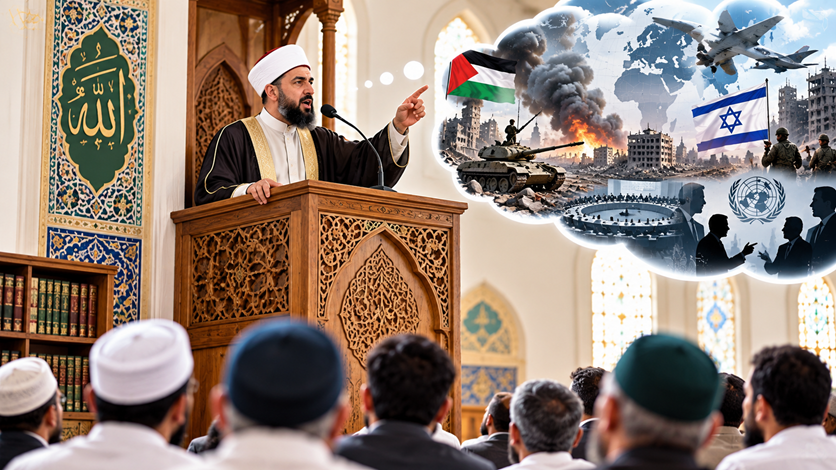
So, the Quran refers to particular groups and episodes, not to all Jews. The tribe names and fuller account of who made which agreements come mainly from the Sira (the life of prophet) and hadith literature (sayings of prophet), whose details historians assess separately from the Quran. Some antisemitic Muslim clerics have used these verses to advance hostility toward entire Jewish communities, teaching that the passages condemn all Jews and portray the whole Jewish community as opposed to Muslims and Islam.
Some Jewish groups of current days have likewise accepted and repeated antisemitic narratives promoted by Islamist clerics, claiming that certain Quranic verses make Islam inherently antisemitic without adequately examining their historical and wartime context. How is it fair to label the Quran antisemitic for repeating the Torah’s own criticism of disbelievers among the Children of Israel?
Wrongdoing and disobedience are human failings found in every nation, community, and religion. The holy Torah, holy Bible, and holy Quran all mention both believers and disbelievers. Muslims should therefore treat divine criticism as a warning and praise as an example, rather than applying such criticism to the entire Jewish community.
Some Islamic texts predict that the Muslim community will commit greater sins and reject divine revelation more extensively than earlier Abrahamic nations. Should such predictions be applied to the entire global Muslim community? Of course not. Likewise, the wrongdoings of disbelievers among the Children of Israel should not be attributed to the global Jewish community as a whole.
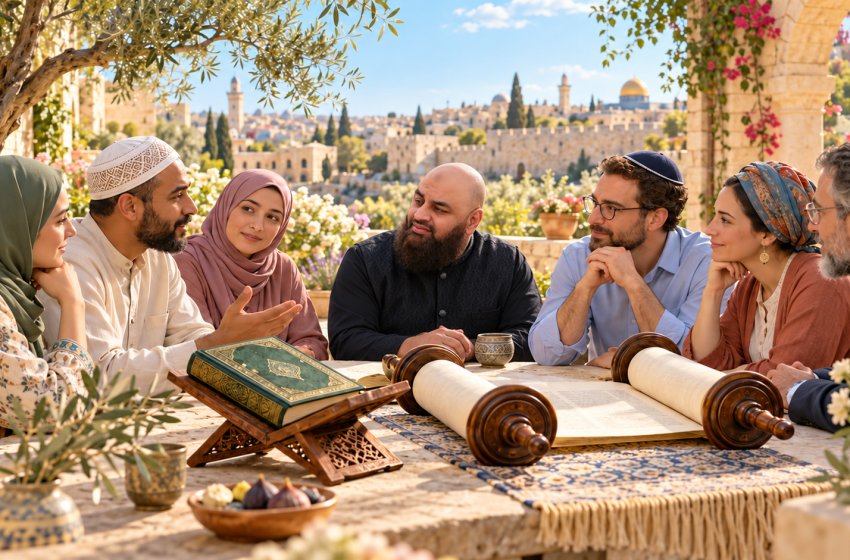
Muslims should reject religious clerics as well political activists who manipulate Islamic texts to promote hatred toward the entire Jewish community, as such teachings harm Islam. Likewise, Jewish communities should not treat the claims of antisemitic Muslim clerics as representative of the Quran or Islam, because doing so advances an Islamist agenda of hatred. Muslim-Jewish unity is the strongest response to clerics who seek to turn Muslims against Jews worldwide.