The Iran-US Agreement (MoU) & the Middle East Security Challenges
Summary
Following the recent US-Iran agreement, international oil prices have fallen back to their lowest levels since before the Iran-US war. However, whether the Middle East itself can return to its pre-war stability remains uncertain. This is the key question facing the region, and no one can yet predict the full impact of the MoU between the US and Iran.
Middle East analysts and security experts remain doubtful that the MoU will bring peace and stability to the region in the near future. They argue that the agreement was not designed to address regional stability, but rather to pause the conflict and restore the flow of oil tankers through the Strait of Hormuz, supporting global economic stability.
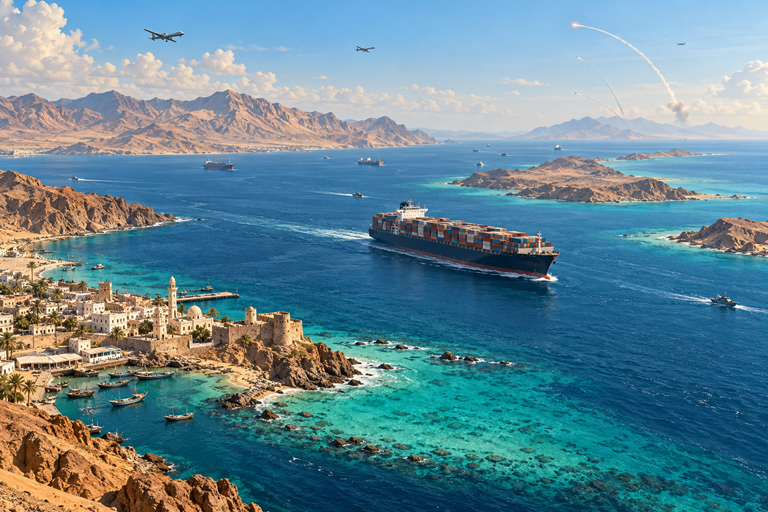
In return, Iran has reportedly been promised the release of hundreds of billions of dollars, the easing of restrictions on its oil trade, and an end to US efforts to block access through the Strait of Hormuz. These concessions are highly significant for Iran in the current situation. However, the war has not fully ended, as several factors could cause fighting to resume or lead Iran to breach the MoU, particularly if tensions escalate in Lebanon. While the US may seek to present the agreement as evidence that it has eased global economic pressures and halted the war in the Middle East, these crises have only been paused temporarily, since Iran still has the ability to disrupt shipping through the Strait of Hormuz.
Several factors could reignite conflict in the Middle East.
Lebanon
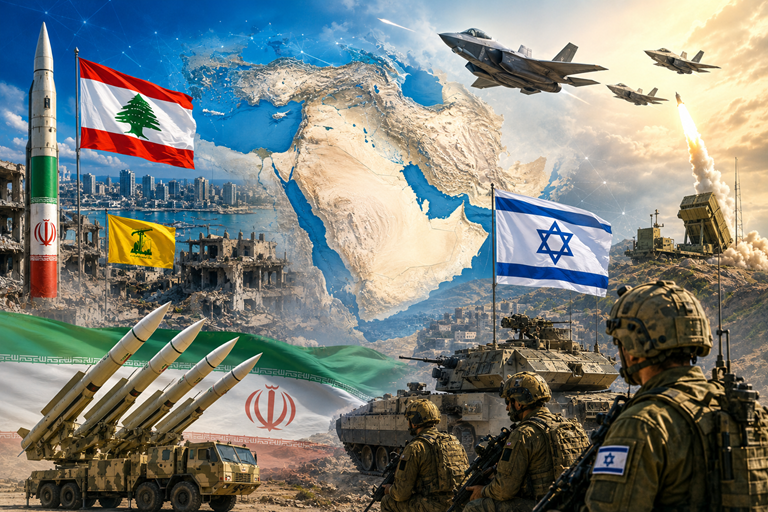
Lebanon is a red line for Iran, and it has said multiple times on different occasions. Iran cannot compromise on losing Hezbollah at any cost Hezbollah is the breathing line for Iranian resistance in the Middle East. Iran has built much of its regional network through Hezbollah, which serves as a central organisation supporting the axis of resistance and sustaining Iranian influence in the Middle East. Without Hezbollah, Iran would struggle to expand its regional power against Arab countries.
Iran has invested billions of dollars in Hezbollah, helping it expands its network internationally and establish itself as a powerful state within the Lebanese state. The organisation now holds significant military and political influence, in some areas exceeding that of the Lebanese army. Hezbollah also has more than a decade of experience fighting conventional warfare against opposition militias in Syria and is believed to possess thousands of missiles and drones stored beneath southern Lebanon.
After the fall of Syria, Iran cannot afford to lose Hezbollah, which remains capable of posing a direct threat to Israel and other regional powers. In the current conflict, Iran is not alone in seeking to preserve Hezbollah’s position; anti-US states such as Russia and China also have an interest in preventing Iran from losing this key ally. I explored this issue in greater detail in my previous article, “The Shadow Allies Behind the Iran-US-Israel War”. Hezbollah also enables Iran to operate abroad and is alleged to have links with drug cartels in Latin America, generating regular income to support Iran’s shadow war against its Gulf opponents.
Gulf States’s Security Concerns
Military tensions in the Middle East have eased temporarily following the memorandum of understanding between the United States and Iran. However, negotiations remain at an early stage, making it too soon to judge their final outcome. A key question is now emerging: who will suffer most from this conflict?
Arab Gulf states worry that US-Iran negotiations could give Tehran excessive concessions and further strengthen its regional influence. Their response is likely to be pragmatic: improving infrastructure, expanding missile defence systems, producing interceptor missiles locally, reinforcing defence lines, and maintaining communication with Tehran to reduce the risk of direct confrontation.
Although Gulf Arab states suffered major losses during the war and exposed weaknesses in their infrastructure, they cannot be considered the conflict’s biggest losers. Instead, they have gradually adapted to the demands of the “America First” policy, including burden-sharing, investment in the US economy, reducing tensions, and promoting regional stability.
Gulf states may ultimately benefit from this crisis, not because they achieved major gains, but because a prolonged war would have imposed far greater costs. Despite their losses, the MoU prevented the conflict from escalating into a far more damaging regional crisis.
Sensitive issues such as Iran’s ballistic missile programme, proxy networks, nuclear ambitions, and control over the Strait of Hormuz remain major challenges for the Gulf states. Yet a prolonged war could have placed these countries under even greater pressure and threatened their long-term security. In recent years, Gulf states have invested heavily in economic diversification, especially in tourism and technology, and an extended conflict could have seriously undermined those efforts.
The US-Iran agreement also reportedly includes a proposal to create a $300 billion fund for Iran’s reconstruction and economic development, with Gulf states expected to provide much of the financing. At the same time, Iran has demanded compensation from regional countries that participated in attacks against it or supported military operations through bases.
In response, Gulf states such as Qatar and the United Arab Emirates have also demanded compensation from Iran for damage caused by its drone and ballistic missile attacks. This creates a complex situation in which Gulf countries may not only pay the price of war but also bear part of the cost of peace.
Gulf states are therefore focused less on gaining advantages and more on limiting potential losses. The proposed $300 billion fund should be understood in this context: any Gulf contribution would likely be treated as an investment rather than aid to Iran. Such economic engagement could help restrain Iran’s hegemonic ambitions through shared commercial interests. Gulf states are unlikely to offer Iran open-ended concessions; any reconstruction package would probably be indirect, conditional, and commercially structured. At the same time, economic interdependence could give these countries a new tool for influencing Iran’s behaviour.
Most of Iran’s restricted funds are held outside the United States. A substantial share is in China, Iran’s largest oil customer, with estimates ranging from $20 billion to $50 billion. Additional funds in Iraq, linked to payments for gas and electricity exports, are estimated at $10 billion to $15 billion. South Korea previously held around $6 billion in Iranian oil revenues, which was transferred to Qatar in 2023, although the United States later indicated that Iran would not receive immediate access to it. Other funds are held in countries including India, Japan, and Luxembourg. By contrast, the amount under US jurisdiction is relatively small, at about $2 billion, much of which is tied to court judgments and compensation claims. (Image Credit: WSJ)
Missile Program
The memorandum of understanding between Tehran and Washington does not include explicit limits on Iran’s ballistic missile programme, a major concern for Gulf states. These are the same missiles used against Gulf countries during the recent conflict, causing significant loss of life and property damage. During the war, Donald Trump’s administration had identified the elimination of Iran’s missile capability as a key objective. Yet during his visit to Paris, Trump softened his position, saying, “If other countries have ballistic missiles, it would be unfair to deprive Iran of having some of them.”
Iran’s missile and drone programme is a major security concern for Gulf countries and Israel, as it has caused significant damage to property, ships, and US bases across the Gulf. China and North Korea played the leading roles in developing Iran’s missile industry, while Russia has also provided military assistance. The agreement also says nothing about limiting the role of Iran’s proxy groups in the Middle East, which remains one of the Gulf states’ main concerns in their dealings with the United States.
The MoU appears more lenient towards Iran than towards the Gulf states. It gives Iran’s proxy groups, missile programme, and drone facilities considerable room to operate, while also providing Iran with a reported $300 billion despite US military and Gulf civilian casualties. Dr Hasan AlHasan, a senior research fellow at IISS has also pointed out these concerns in his article:
“The agreement also overlooks Iran’s support for non-state armed groups (NSAGs) in the region, including Hizbullah in Lebanon, the Ansarullah (Houthis) in Yemen or the Popular Mobilization Units in Iraq. Iran-backed militias have turned Iraq into a launchpad for strikes against Bahrain, Kuwait, Saudi Arabia and the UAE, prompting limited retaliation by Saudi Arabia and possibly Kuwait. In fact, the agreement appears to provide protection to Iran’s armed NSAGs, which at Iran’s insistence are covered by the ceasefire agreement, from further attacks by Israel or the Arab Gulf states.”
Israel’s Security Challenges
Israel is located in the Middle East, surrounded by hostile countries, and has fought for its survival since its founding in 1948. It understands regional politics in ways the United States does not, which is why Israel’s political, national security, and regional interests have often differed from those of the US. Israel’s wars and peace agreements have consistently been driven by survival rather than efforts to occupy Gulf states or establish military bases in the region. It has relied on both conventional warfare and shadow operations to eliminate threats and weaken the military capabilities of hostile states.
Since the Oct 7 attacks in 2023, regional actors have openly waged war against the State of Israel, expanding the conflict across seven fronts where fighting continues. Israel has suffered thousands of military and civilian casualties during the war, including 16 soldiers killed in June in fighting against Hezbollah, Iran’s proxy in Lebanon. Israel now faces political challenges ahead of the October election, as well as military pressure to complete operations against Hamas in Gaza and Hezbollah in Lebanon. It cannot afford to lose on either front, as another Oct 7-style attack could occur in the near future, especially as Iran has emerged from the war stronger than before.
Hamas has not yet been defeated, and Hezbollah has adopted drone warfare tactics against the Israeli army in Lebanon, creating a new threat to civilians in northern Israel. A recent Jerusalem Post report stated that dozens of drones may have entered Gaza from Egypt and are now in Hamas’s possession, potentially enabling it to wage a Hezbollah-style drone campaign against Israel.
“At least 28 drones managed to cross into the Gaza Strip in recent months, Army Radio reported Wednesday. The defence establishment has become increasingly concerned that weapons and supplies smuggled across the Gaza border in this way will be used by Hamas for terror operations.”
The current MoU between the US and Iran makes no provision for Israel, despite the fact that it has been fighting for nearly two years and has suffered significant civilian losses. By ignoring Israel’s demands, the agreement could strengthen its enemies and raise serious security concerns for its citizens. Israel has little choice but to accept the MoU, even though it has repeatedly expressed concern over two key omissions: limits on Iran’s proxy networks in the Middle East and restrictions on its missile programme. In practice, Israel has rejected the MoU, while Gulf countries have raised similar concerns with Washington.
Conclusion
The MoU gives Iran more leverage than the countries most affected by its missiles and drones in recent wars. Under President Trump, the United States appeared less able to protect its Middle Eastern allies. Although Gulf countries have hosted US military bases for decades in the expectation of protection against Iranian aggression, the recent conflict exposed the limits of that security guarantee. As a result, the UAE has strengthened military cooperation with Israel, while Saudi Arabia has signed a defence agreement with Pakistan and may seek similar arrangements with Turkey and Egypt.
Israel is unlikely to stand down until it achieves its objectives in Lebanon and Gaza, as it sees these campaigns as essential to its survival, defence, and protection of its citizens. The US has already accepted Iranian demand to wind up its military basis from the Middle East. The Iranian successful drone and missile attacks on the US naval base in Bahrain has forces the US to consider relocating its military basis. According to Capt. Tim Hawkins, a spokesman for U.S. Central Command:
“The extensive damage done to America’s sole naval base in the Middle East—along with hits to at least 20 U.S. sites across the region, including military installations and diplomatic facilities—has the U.S. re-evaluating its entire footprint in the region, according to U.S. officials familiar with the deliberations.”
Gulf countries clearly need an agreement to end a war that has already damaged their reputation, economies, and infrastructure. This helps explain why Saudi Arabia refused to allow the US to use its bases airspace access during the war against Iran, as it sought to avoid another Yemen-style conflict that could harm its regional interests. Israel, however, cannot afford a pause in the war, as it would give its enemies time to rebuild their strength and prepare for another conflict. Israel still believes the Iranian regime could have collapsed if the war had continued as aggressively as it began, following Israeli and US air force attacks on Iranian military figures and bases.
According to a former senior Mossad official:
“We didn’t try all the way, we were stopped along the way,” said the ex-Mossad official, identified only as “Aleph,” who retired last year. “This is a multi-stage plan that has been prepared over time and has been paused for the time being. In this war, we went out with a partner, a strategic power that at some point stopped the fighting, but these stages started and developed, including the use of Kurdish partners, with the goal of replacing the regime.”
Ending the war without achieving its strategic and military goals could cause greater damage after the conflict than before it, suggesting that the US prioritised its own interests over those of the region.
Sources:
- The American – Iran Memorandum of Understanding: Ceasefire in Lebanon and the Reaction of the Resistance Axis
- Gulf states press US not to ignore threat from Iranian missiles
- Iranian regime will fall sooner or later, but US stopped war too early, ex-Mossad agent says
- How Iran Devastated an American Naval Base and Caused a U.S. Recalculation
- Iran sets Lebanon ‘red line,’ rejects Vance claim on nuclear inspectors
- Cooperation Between China, Iran, North Korea, and Russia: Current and Potential Future Threats to America | Carnegie Endowment for International Peace
- A bad peace: the Arab Gulf states and the US–Iran memorandum of understanding
- Dozens of drones entered Gaza Strip over recent months, fear Hamas could use in attacks
- Gulf States Lift Restrictions That Blocked ‘Project Freedom’ in Strait of Hormuz
- See Where Iran’s Billions of Dollars in Frozen Assets Are Held