Challenges in Building Muslim Support for Israel
Many Jewish people have expressed concern about what they perceive as limited support from members of the Muslim community. Jayne Wynick, a UK born writer and author has also raised a similar question to me. For the purpose of this article, I have divided the discussion into two main sections: Muslims’ Attitudes Towards Israel and The Challenges of Muslim – Jewish Interfaith Dialogue.
In each section, I will explore the historical, political and ideological factors that have shaped these issues and present them in a way that is accessible and easy for the audience to understand.
Muslims Odd Attitude
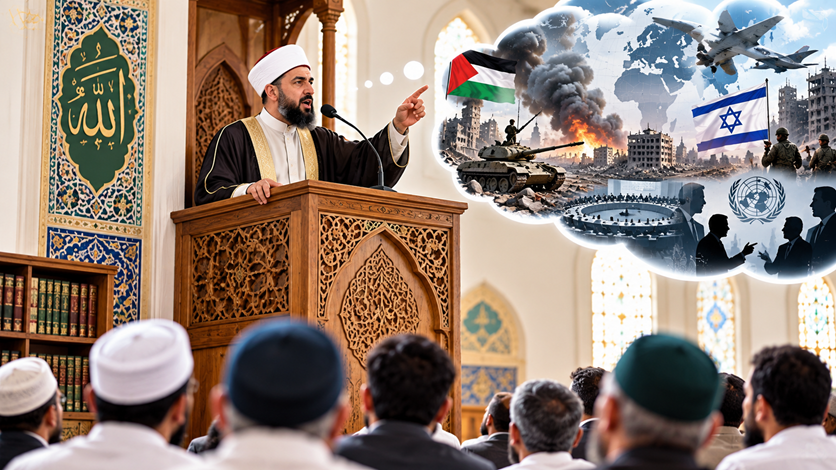
The development of anti-Israel sentiment within Muslim communities in the West did not emerge overnight. It was shaped over decades through organised religious, political, and ideological networks.
Many early Arab immigrant clerics arrived with a combination of political Islamist and Arab nationalist ideas shaped by the conflicts and political struggles of the Middle East. They possessed strong religious credentials, leadership experience, and the ability to mobilise communities around political and religious causes. Some were deeply associated with the ideology of the Muslim Brotherhood, an Egypt-based political Islamist movement.
Along with their religious teachings, they introduced political narratives shaped by the conflicts of the Middle East, including opposition to Zionism and support for various Arab nationalist and Islamist movements. They also brought organisational experience, financial resources, and an understanding of how to build religious and political networks within immigrant communities.
These figures helped establish institutions, organisations, and activist networks that transmitted particular narratives about Israel, Zionism, and the wider Middle East to future generations. Over time, these ideas became embedded within sections of community, religious, and political activism.
As these networks expanded, they helped shape political and religious discourse among the Muslim communities in Western countries. The result was the growth of well-organised activist movements that became increasingly influential in public debates, community institutions, and street-level mobilisation.
As I highlighted above, the negative attitudes towards Israel within the Muslim word are not a new phenomenon. Rather, they have been shaped by a combination of historical, political, social, religious, and regional factors. Some of the key factors include:
- Political Factors
- Historical Factors
- Geographical Factors
- Regional Factors
- Ideological Factors
- Religious Factors
- Social Factors
- Economic Factors
- Ethnic and Identity Factors
- Power and Dominance Factors
It is important to recognise that attitudes towards Israel and, in some cases, towards Jews, are not uniform across the Muslim world. They vary significantly from one region to another and are influenced by local history, politics, culture, and social conditions and grievances.
For example, people in the Middle East may hold views shaped by regional conflicts and historical events, while Muslims living in Western countries are often influenced by different social, religious and political dynamics. Similarly, South Asian Muslim communities may have different perspectives from those found in the Balkans, Central Asia, or Africa.
Therefore, it would be inaccurate to view Muslim attitudes towards Israel as a single, unified phenomenon. Instead, these attitudes should be understood within their specific historical, political, cultural, and regional contexts.
In my view, three primary factors are often used to shape and reinforce negative attitudes towards Israel within the Muslim world:
- Political Factors
- Religious Factors
- Historical Factors
These factors frequently overlap and interact with one another. For example:
- Political arguments are often reinforced through selective interpretations of history.
- Historical events are sometimes viewed through contemporary political lenses.
- Religious texts are invoked in political discussions and interpreted in ways that support particular historical or political narratives.
These complex and often overlapping issues represent some of the most important areas that require open, honest, and intellectually rigorous discussion between reasonable people from all sides.
Among many Muslims in the West who hold negative views of Israel, political and religious arguments are frequently intertwined. Political grievances are often expressed through religious language, while religious texts are sometimes interpreted in ways that support political positions regarding Israel and the Jewish people.
At the same time, there are many Muslims who privately support Israel’s right to exist, support dialogue with Jewish communities, or hold more nuanced views on the conflict. However, they choose not to express their views publicly for a variety of reasons, including:
- Lack of family support
- Fear of social exclusion within their communities
- Fear of intimidation or threats from extremist elements
- Concerns about professional, political, or social consequences
- Fear of losing friendships, relationships, or community standing
- Fear of religious condemnation or accusations
- Financial and career-related concerns
- Fear of isolation and loneliness
- Lack of protection or support networks
- Insufficient Jewish support available for those who speak out
As a result, many individuals who hold alternative views remain silent. Those who choose to speak publicly often do so at considerable personal, social, and professional cost.
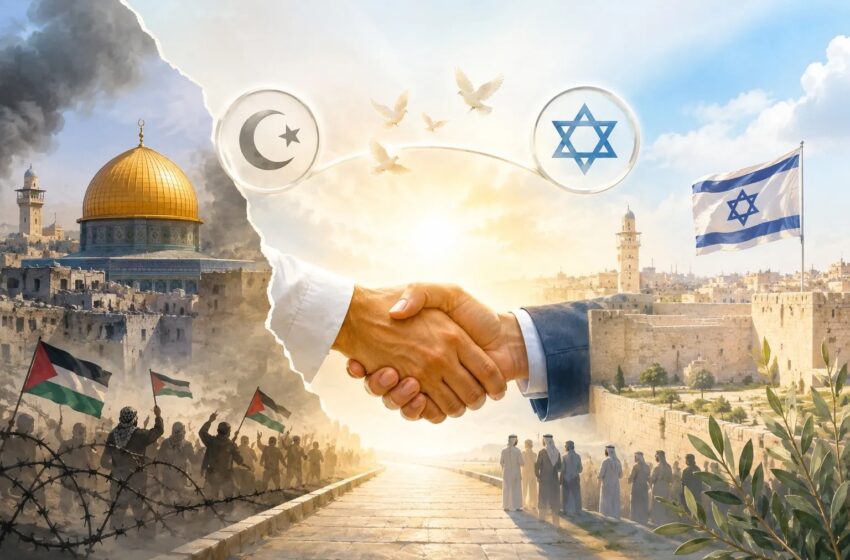
Regardless of one’s political position, the existence of individuals willing to build bridges between Muslim and Jewish communities demonstrates that dialogue, mutual understanding, and coexistence remain possible. These voices continue to provide hope that constructive engagement can prevail over division and hostility.
The Challenges in Interfaith Dialogue
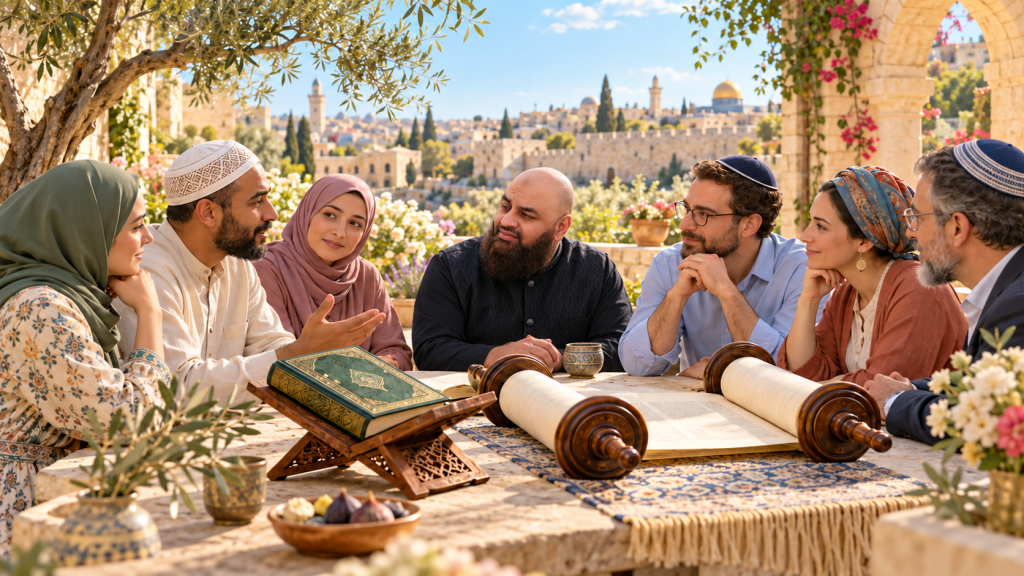
For several decades, Muslim – Jewish interfaith dialogues have been held across many Western countries, often focusing on the common values, shared heritage, and theological similarities between Islam and Judaism. These initiatives have undoubtedly contributed to building relationships and fostering understanding between religious leaders and community representatives.
However, a recurring challenge emerges whenever conflict escalates between Israel and Hamas. During such periods, many Muslim activists and organisations that normally participate in interfaith activities become noticeably less visible in the public sphere. This often leaves a vacuum that can be exploited by extremists and antisemites who target Jewish communities through hostile rhetoric, intimidation, and, in some cases, physical attacks.
When tensions eventually subside, many of the same interfaith actors re-emerge and resume promoting dialogue based on shared values and common ground. While this work remains important, it raises questions about the resilience and effectiveness of interfaith engagement during times of crisis.
In my view, one of the principal shortcomings of many interfaith initiatives is their tendency to focus heavily on areas of agreement while avoiding more difficult conversations surrounding antisemitism, prejudice, historical grievances, political disagreements, and theological differences. These sensitive issues are often the very factors that contribute to tensions between communities, yet they frequently remain insufficiently addressed.
As a result, despite decades of dialogue and engagement, the practical impact on reducing antisemitism at the grassroots level has often been limited. Many members of Jewish communities feel that during periods of heightened tension and increased antisemitic incidents, they receive insufficient public support from some individuals and organisations that are otherwise active in interfaith work.
This perception creates a credibility challenge for interfaith initiatives. If dialogue is highly visible during peaceful periods but less visible when communities face hostility and intimidation, questions naturally arise regarding its long-term effectiveness and commitment.
For interfaith dialogue to achieve its full potential, it must not only celebrate similarities but also address difficult issues honestly, consistently, and courageously. True partnership is tested not only during times of harmony but also during moments of disagreement, crisis, and communal vulnerability.
The question, therefore, is not whether interfaith dialogue should continue – it should. The more important question is why many of these initiatives have struggled to produce lasting social change and what tools, frameworks, and difficult conversations may have been missing from the process.
In my view, successful interfaith engagement must go beyond highlighting similarities and shared values. It must also be willing to address differences honestly, confront hatred directly, challenge antisemitism wherever it exists, and examine religious and cultural prejudices that affect relations between communities.
There are certain religious texts and traditions within Islam that, in my opinion, have been misinterpreted or selectively used by some Islamist movements and individuals to promote hostility towards Jews. Whether these interpretations are historically or theologically sound is precisely the type of question that should be examined openly, honestly, and rigorously within Muslim – Jewish interfaith dialogue.
Avoiding controversial subjects does not make them disappear. On the contrary, it often leaves them unchallenged and available to be exploited by extremists who seek to spread division and hatred. Difficult conversations may be uncomfortable, but they are often essential for genuine understanding and long-term progress.
If interfaith dialogue is to have a meaningful impact on reducing antisemitism and strengthening relations between Muslims and Jews, it must be prepared to address the underlying causes of prejudice rather than limiting itself to symbolic gestures and polite conversations. Genuine dialogue requires not only mutual respect but also the courage to confront difficult truths, challenge harmful narratives, and engage with issues that have too often remained unresolved.
I am planning to write a comprehensive research paper examining the factors discussed above in order to help the Jewish community better understand the underlying reasons behind the negative attitudes towards Israel that exist within the Muslim community in the Western world.
These attitudes did not emerge spontaneously. They have been shaped over many decades through a combination of political, historical, religious, and ideological influences. Understanding how these narratives were developed, transmitted, and embedded within the Muslim communities is essential for anyone seeking to address the issue effectively.
The purpose of this research is not to assign blame, but to identify and analyse the factors that have contributed to these attitudes and to explore practical ways of addressing them. Any long-term strategy aimed at improving Muslim-Jewish relations must first understand the origins of the problem before proposing solutions.
I believe, there is a need for sustained intellectual, educational, and community-based efforts to challenge political and religious narratives that have been used to foster hostility towards Jews and Israel. Such efforts should be evidence-based, historically informed, and focused on promoting critical thinking, dialogue, and mutual understanding.
Only by understanding the roots of prejudice can communities begin to develop effective frameworks for countering hatred, strengthening interfaith relations, and building a more constructive future for both Muslims and Jews in Western societies.