Iran’s Asymmetric Leverage: Three Strategic Cards
Summary:
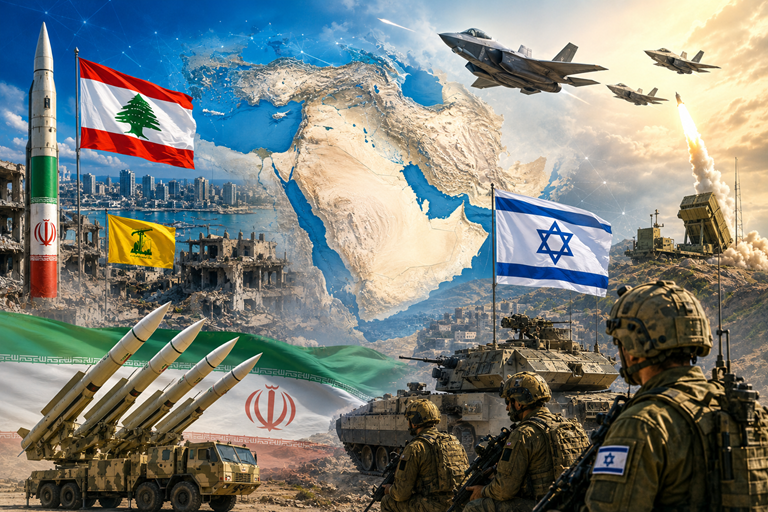
The 2026 war between Iran and the United States–Israel alliance fundamentally transformed the balance of power in the Middle East. Beginning on 28 February 2026, the conflict rapidly escalated into one of the most destructive military confrontations in modern Iranian history. Thousands of Iranian security personnel, including Islamic Revolutionary Guard Corps (IRGC) officers, naval commanders, aerospace officials, intelligence chiefs, and senior civilian leaders, were killed during massive – coordinated strikes against Iran’s military and political infrastructure. According to multiple reports and open-source assessments, Iran suffered devastating command losses, including the deaths of top IRGC commanders, senior intelligence officials, and important members of the Iranian political establishment.
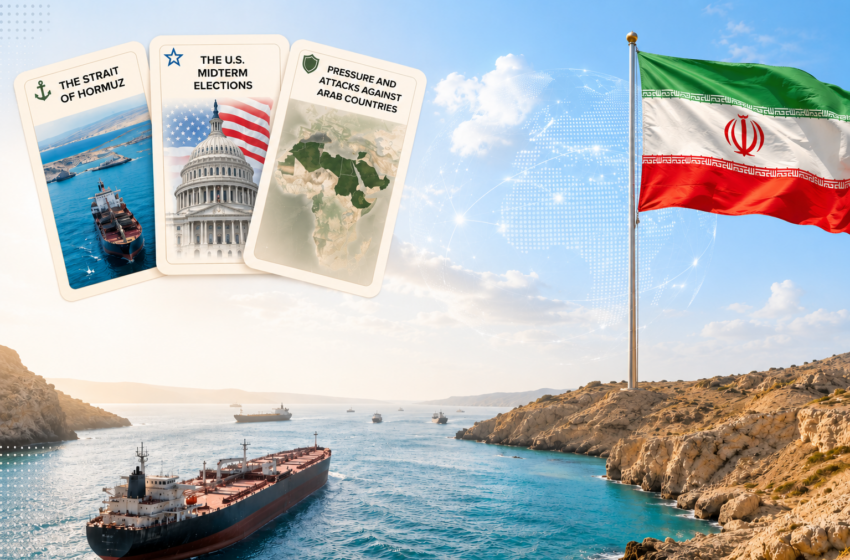
Despite these enormous losses, Iran did not collapse militarily or politically, instead, Tehran adapted its strategy, unable to compete conventionally against the overwhelming airpower and intelligence superiority of the United States and Israel, Iran shifted toward asymmetric leverage. Rather than trying to win through direct military confrontation, Iran began using three major strategic “cards” to pressure its adversaries and reshape the regional balance.
- The Strait of Hormuz
- The U.S. Midterm Elections
- Pressure and Attacks Against Arab Countries
These three instruments now form the core of Iran’s post-war strategic survival doctrine.
The First Card: The Strait of Hormuz
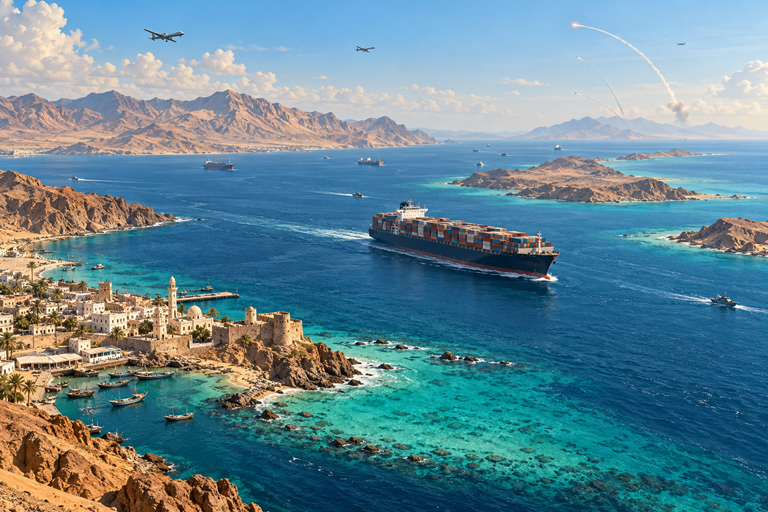
The Strait of Hormuz has become Iran’s most powerful geopolitical weapon after the war. The narrow waterway is one of the world’s most important maritime chokepoints, carrying a substantial portion of global oil and gas exports. Following the war, Iran increasingly tightened control over the strait through military patrols, inspections, route restrictions, and a new Iranian-controlled maritime system.
Iran understood a crucial reality after suffering heavy battlefield losses: it could not match American or Israeli conventional military power directly. However, Tehran also recognised that it could still create global economic pain. By threatening or partially restricting shipping in Hormuz, Iran could increase oil prices, disrupt supply chains, trigger inflation, and place political pressure on Western governments.
Recent reporting shows Iran has already implemented mechanisms resembling a de facto maritime control regime. Ships have reportedly faced inspections, delays, “security fees,” and selective routing based on political alignment. Iran appears to be favouring countries such as China, Russia, Pakistan, and India while pressuring Western-linked shipping companies. This represents not merely military retaliation, but economic coercion.
The closure or disruption of Hormuz creates immediate consequences for global markets. Analysts have warned oil prices could rise dramatically if the crisis continues. The resulting inflationary shock affects not only Europe and Asia but also the United States. Rising fuel prices influence transport costs, food prices, manufacturing, and public dissatisfaction.
This is precisely where Iran’s strategy becomes politically sophisticated. Tehran understands that economic pressure can weaken political unity within the United States and among Western allies. The more expensive energy becomes, the harder it is for Washington to maintain long-term confrontation without domestic political consequences.
Moreover, Iran’s control over Hormuz has symbolic significance. The war demonstrated that Iran’s most powerful strategic capability was not necessarily its missile programme or nuclear infrastructure, but rather its ability to threaten one of the world’s most critical economic arteries. Some analysts described this as transforming Hormuz into a “Weapon of Mass Disruption.”
Thus, even after suffering severe military losses, Iran retained the ability to influence the global economy and challenge American strategic credibility.
The Second Card: The U.S. Midterm Elections
The second major card Iran is using is political pressure connected to the American midterm elections.
Iranian strategists understand that the United States is deeply polarised politically. Wars that produce prolonged economic pain, high energy costs, military casualties, or instability often become unpopular with voters. Tehran therefore appears to believe that time may work in its favour.
The logic is straightforward. If oil prices remain high, inflation worsens, and global markets remain unstable because of the Hormuz crisis, American voters may blame the administration that initiated or supported the conflict. This could weaken political support for continued confrontation with Iran. Several analysts have noted that the outcome of the crisis may depend heavily on how worried American political leaders become about domestic electoral backlash.
Iran is therefore pursuing a strategy of endurance rather than decisive battlefield victory. Instead of attempting to defeat the United States militarily, Tehran seeks to raise the political cost of the war. Economic disruption, shipping insecurity, and prolonged instability can all influence voter sentiment.
Historically, American foreign policy has often been shaped by domestic electoral considerations. Prolonged military engagements can lose public support if they are associated with inflation, economic decline, or the perception of strategic failure. Iran appears to be calculating that a divided American political environment creates opportunities for strategic patience.
In many ways, Tehran’s leadership likely views the conflict not simply as a military struggle, but as a political contest over endurance. Iran’s strategy resembles asymmetric warfare at the geopolitical level: survive the initial military assault, create long-term economic disruption, and wait for political divisions inside the United States to weaken Washington’s ability to sustain pressure.
This does not necessarily mean Iran expects immediate policy reversal from the United States. Rather, Tehran may hope that electoral pressures could reduce enthusiasm for escalation, encourage diplomatic compromise, or increase divisions within Congress and among Western allies.
The midterm election factor therefore becomes part of Iran’s broader deterrence strategy. By linking military confrontation to domestic political costs inside the United States, Tehran attempts to shift the battlefield from missiles and airstrikes to inflation, public opinion, and electoral politics.
The Third Card: Pressure on Arab Countries
The third major leverage card involves attacks, pressure, and intimidation against neighbouring Arab states.
During and after the war, Iran launched missiles, drones, and security threats against several Gulf countries. Tehran warned that any country assisting American or Israeli military operations could become a legitimate target. This transformed the conflict from a bilateral war into a broader regional security crisis.
Iran’s objective here appears to be strategic deterrence and regional pressure. Gulf Arab states host important American military facilities, logistical hubs, energy infrastructure, and intelligence operations. Tehran wants these governments to fear the consequences of deeper cooperation with Washington and Israel.
By threatening Gulf energy facilities, airports, ports, and maritime infrastructure, Iran seeks to create regional uncertainty. The message is clear: if the war against Iran continues, the entire Gulf region may pay the price.
This strategy also attempts to widen divisions between the United States and its Arab partners. Gulf monarchies depend heavily on economic stability, foreign investment, tourism, and uninterrupted energy exports. Prolonged instability threatens all of these sectors.
Recent reports suggest Gulf leaders have already pushed for restraint and mediation to avoid wider escalation. Qatar, Oman, and Pakistan have reportedly played important diplomatic roles in negotiations concerning the Strait of Hormuz and broader ceasefire efforts. Gulf states fear becoming trapped between Iran and the United States.
Iran’s pressure on Arab countries therefore serves several purposes simultaneously:
- Discouraging regional military cooperation against Iran
- Increasing pressure for diplomacy and de-escalation
- Raising global energy fears
- Demonstrating that Iran still retains regional strike capability despite battlefield losses
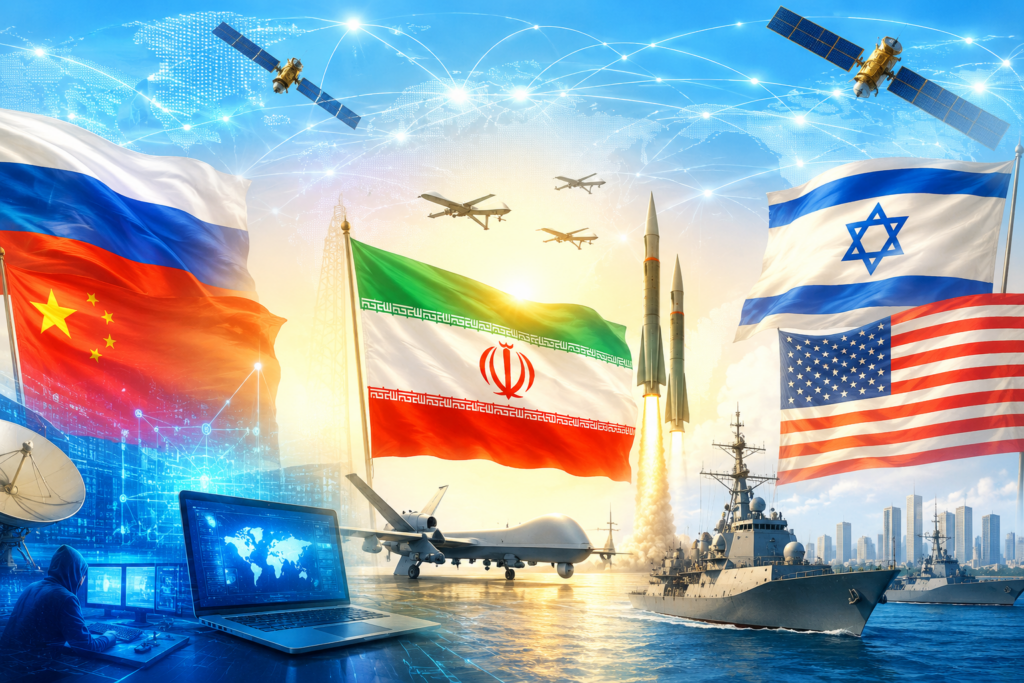
Even weakened militarily, Iran remains capable of asymmetric retaliation through missiles, drones, proxy networks, cyber operations, and maritime disruption. Tehran’s leadership understands that neighbouring Arab states are highly sensitive to instability and economic uncertainty.
However, this strategy also carries risks for Iran. Some Gulf governments may move closer to Washington if they conclude Iran poses a direct long-term threat to regional security. Several analysts have warned that Iranian attacks on Gulf states could unintentionally strengthen regional anti-Iran cooperation. Nevertheless, from Tehran’s perspective, the objective is not necessarily to win militarily, but to raise the strategic cost of isolating Iran.
Iran may have lost much of its senior military leadership, but it still possesses the capacity to shape regional instability, influence global energy markets, and complicate American strategic planning. The conflict therefore continues not only on the battlefield, but also in shipping lanes, energy markets, diplomacy, and political systems across the Middle East and beyond.