The Palestinian Syndrome & the UK’s Jewish Community
The global population of Arab Muslims who identify as Palestinian is estimated at approximately 15.2 – 15.5 million. Around 1.5 million live outside the Middle East, particularly in the Western world. This includes roughly 350,000 – 400,000 in Europe, 300,000–350,000 in North America, more than 600,000 in Latin America, 30,000 – 50,000 in Australia and New Zealand, and smaller communities in many other countries.
There is no official UK figure for the number of people of Palestinian ethnicity or descent, as the UK census does not list “Palestinian” as a separate ethnic category. One report estimates the Palestinian community in the UK at 20,000–30,000. However, some community organisations and researchers suggest the current figure may be closer to 30,000–40,000, particularly following arrivals through family reunification and humanitarian routes after the Gaza war began in October 2023, though no official data confirms this. However, the Arab Center for Research and Policy Studies suggests the Palestinian population in the UK is significantly higher, citing an increase from 20,000 in 2001 to about 60,000 by 2017.
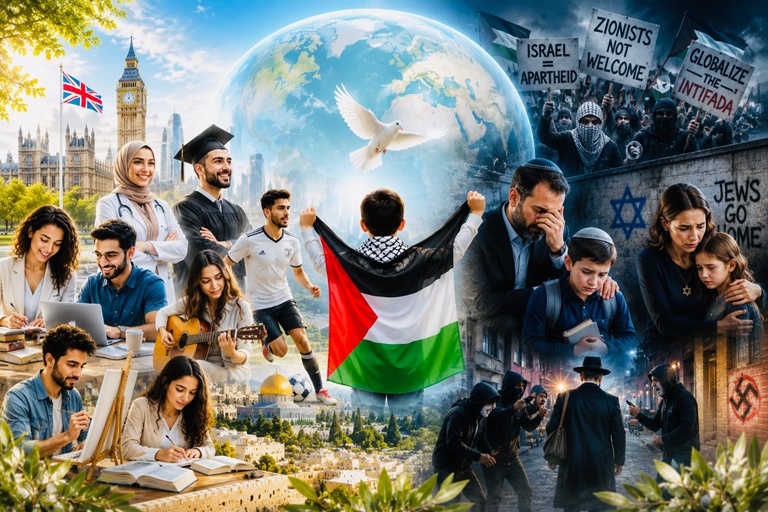
Focusing on Palestinians in the UK, many have achieved distinction across fields such as journalism, sport, academia, acting, music, filmmaking, writing, art, law, medicine, history, business, and politics. Their success demonstrates that Palestinians can contribute meaningfully to public life and professional institutions without being defined solely by conflict or political violence. I welcome these achievements because I believe Palestinian talent and energy are best directed toward constructive human endeavour.
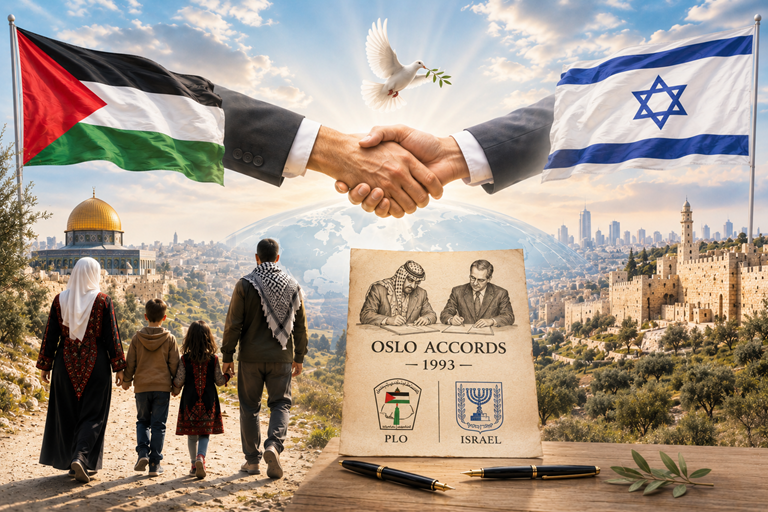
Since the creation of the State of Israel in 1948, Arab Muslims who identify as Palestinians have migrated to the Western world from the West Bank, Gaza, Jerusalem, and other parts of the Middle East. After more than 75 years, many Palestinian families are now in their fourth or fifth generation, born and raised within Western societies. Many continue to express solidarity with Palestinians living in Gaza and in Areas A and B of the West Bank, which have been administered by the Palestinian Authority since the Oslo Accords.
I am sometimes struck by the extent of the freedoms Palestinians enjoy in the Western world.
In western countries such as UK, they have access to private and public institutions, the freedom to express political views even when critical of the UK polices where they are born or raised and the rights to practise their religion, participate in social life, move freely, and protest publicly.
In this respect, they are often presented as an example of Muslim participation in Western societies. I have no objection to Palestinians having full access to these freedoms and rights. However, I am concerned that other communities and ethnic groups may not enjoy the same freedoms and rights equally across all UK institutions.
Palestinians in the UK are free to support their political cause and often receive backing from the wider Muslim community, as well as from various English social and political groups. They may wear Palestinian clothing, display Palestinian flags on cars, homes, or in public spaces, and express their views in streets and educational institutions. In many UK settings, particularly within education, they are treated with respect and dignity. They are generally able to support the Palestinian cause or wear Palestinian symbols at universities and social events without harassment, bullying, or abuse.
Regardless of how many generations Palestinians have lived in the UK, or whether they enjoy wealth, success, and comfortable lives, they are often still described as victims of Israeli oppression, statelessness, homelessness, and refugees. In my view, similar recognition is not extended to Kurdish or Rohingya communities in the UK, perhaps because their oppressors are not identified with a Jewish state but with countries such as China or Arab-majority states. I cannot recall any Palestinian-identifying person experiencing discrimination, harassment, bullying in educational institutions, death threats, or being killed because of their Palestinian identity, cause, or political views. Thank God.
Turning now to the Jewish community, Jews have lived in the UK for centuries and have made significant contributions across many fields. They have supported the UK economy through investment and enterprise, while also contributing to humanity through science, technology, innovation, and new inventions. They suffered the catastrophic loss of Jewish lives, communities, ethnicity and identity during the Holocaust and, after centuries of persecution and insecurity, sought a safe homeland where they could enjoy full human rights and freedoms. In 1948, this aspiration was realised with the establishment of the State of Israel in the holy land.
However, in my view, the Jewish community in the UK has not always enjoyed the same rights and freedoms as the Palestinian community. Jewish people feel unable to practise their religion openly because they risk being attacked while observing religious customs. They also faced abuse or threats for expressing political opinions, harassment or bullying in educational institutions, and hostility in public when wearing Jewish symbols such as the Star of David or a kippah. Some even feel pressured to hide their Jewish identity in institutions out of fear of racism.There is no doubt that most British Jews support Israel’s right to exist. According to one report,:
“80% of British Jews support Israel’s right to exist as a Jewish state.”
By contrast, majority of Muslims, including British Palestinians, support the Palestinian cause. Another report states that “a clear majority of British Muslims sympathise with the Palestinian cause in the broad sense.” A separate poll found that 70% of British Bangladeshis, 71% of British Pakistanis, and 72% of Black British respondents wanted greater support for public displays of pro-Palestinian solidarity. However, holding or expressing a political view should never be used to justify violence, harassment, threats, or racism against any community.
British communities that support the Palestinian cause appear to overlook reports of corruption among Palestinian political leaders, as well as concerns about human rights violations, women’s rights abuses, and the treatment of Palestinian prisoners. Instead, they often focus primarily on the Palestinian cause and criticism of Israeli military operations, while giving less attention to human rights concerns within Palestinian society.
Western societies often present Palestinians as political, social, moral, and courageous role models, while paying less attention to conditions in Palestinian territories, where some communities face limited human rights protections, restricted basic freedoms, and oppression based on political, tribal, or religious divisions.
The “Palestinian Syndrome” can be understood as a tendency within some Western communities to view Palestinian society from only one perspective while ignoring others. In this view, Palestinians are seen solely as a resistance movement against Israeli oppression, with no interest in acknowledging negative aspects of Palestinian society, the conduct of Palestinian leaders toward their own people, or the benefits some Palestinians receive from the State of Israel. I believe this outlook is often driven by hostility toward Israel and, in some cases, extends into blame directed at Jewish communities in the West, particularly in the UK.
In my view, the Jewish community is among those most affected by oppression, dehumanisation, attacks, bullying, harassment, intimidation, and violence in the Western world, particularly in universities across the UK, simply because they are Jewish. They may not always feel safe exercising their human rights, including their political, religious, social, identity-based, and ethnic freedoms. This raises an important question: will civil society in Britain show greater sympathy and support for the Jewish community as a group whose rights are, in my view, increasingly restricted by majority in the West who possess what I call the “Palestinian Syndrome”?