The Human, Military, and Economic Cost of the Iran War and Its Long-Term Impact
Summary:
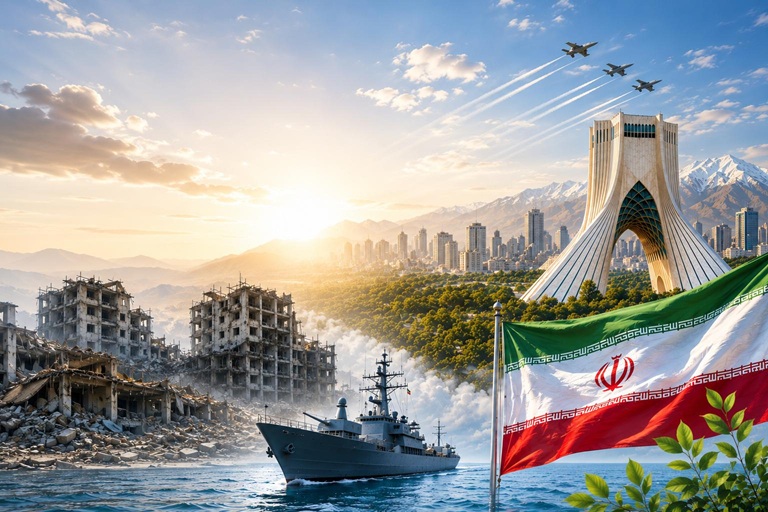
The 2026 war between Iran and the United States–Israel alliance represents one of the most devastating events in modern Iranian history. Beginning on 28 February 2026, the conflict rapidly evolved into a large-scale military confrontation targeting Iran’s armed forces, missile infrastructure, nuclear facilities, military industries, intelligence networks, and senior political leadership. The war caused severe losses across every major branch of the Iranian state, including the Army (Artesh), the Islamic Revolutionary Guard Corps (IRGC), the Navy, the Air Force, intelligence services, and the civilian leadership structure. At the same time, Iran’s economy, industrial infrastructure, and strategic nuclear programme suffered immense damage.
Despite the scale of destruction, Iran did not collapse. Instead, the country entered a new phase characterised by strategic adaptation, economic hardship, political uncertainty, and military restructuring. The consequences of the war will likely shape Iran’s future for decades.
The Scale of Military Losses
The most immediate and visible impact of the war was the destruction of Iran’s military command structure. According to multiple reports and casualty assessments, between 4,700 and 6,600 Iranian military personnel were killed during the conflict, including thousands of IRGC members and senior commanders.
The war was unique because it focused heavily on “decapitation strikes.” Instead of targeting only military hardware, U.S. and Israeli operations concentrated on eliminating Iran’s senior leadership and command networks. Among the most important figures killed were:
- Supreme Leader Ali Khamenei
- IRGC Commander Mohammad Pakpour
- Defence Minister Aziz Nasirzadeh
- Ali Shamkhani, Secretary of Iran’s Defence Council
- Major General Majid Khademi, head of IRGC Intelligence
- Ali Larijani, Secretary of the Supreme National Security Council
- numerous aerospace, naval, intelligence, and regional IRGC commanders
The loss of so many senior leaders created an unprecedented leadership vacuum inside Iran’s security establishment. Iran’s military system has historically relied on centralised command structures, ideological loyalty, and personal relationships among commanders. The elimination of these figures severely disrupted operational coordination and strategic planning.
Damage to the IRGC
The IRGC suffered the greatest losses of any Iranian military institution. The IRGC functions not only as a military force but also as the ideological backbone of the Islamic Republic. It controls missile programmes, drone operations, intelligence networks, economic enterprises, and regional proxy operations.
Israeli and American strikes specifically targeted IRGC command headquarters, intelligence facilities, missile bases, and logistics centres. According to military assessments, thousands of IRGC personnel were killed or wounded.
The long-term impact on the IRGC will likely include:
- weakened command cohesion
- reduced operational efficiency
- increased factional rivalry
- accelerated decentralisation of regional commands
- dependence on emergency wartime structures
Although Iran can replace ordinary soldiers relatively quickly, experienced IRGC generals and intelligence officers are much harder to replace. The deaths of senior commanders created institutional gaps that may take years to rebuild.
At the same time, the war forced the IRGC to change its strategic doctrine. Before the conflict, Iran relied heavily on centralised missile and drone infrastructure. After the war, the IRGC increasingly shifted toward mobile launch systems, underground facilities, dispersed operations, and asymmetric warfare tactics.
Losses in the Iranian Army (Artesh)
Although international attention focused mostly on the IRGC, the regular Iranian Army (Artesh) also suffered significant losses. Military bases, air-defence installations, radar systems, and logistics centres across Iran were repeatedly targeted.
The death of senior military officials, including General Abdolrahim Mousavi according to some early reports, reflected the vulnerability of Iran’s conventional military structure. The Army’s air-defence network suffered especially heavy damage. Israel reportedly succeeded in degrading large parts of Iran’s radar and surface-to-air missile systems during the opening phase of the war.
As a result, Iran’s future military strategy is likely to rely less on conventional warfare and more on asymmetric tactics, cyber operations, drones, proxy militias, naval disruption, and underground missile infrastructure.
This marks a major transformation in Iran’s defence doctrine.
Destruction of the Iranian Navy
One of the most strategically devastating blows came against the IRGC Navy. U.S. and Israeli strikes reportedly destroyed major naval infrastructure, shipyards, command centres, and maritime missile systems. Some assessments claim that over 90% of Iran’s large naval vessels were destroyed or disabled. The killing of IRGC Navy commander Alireza Tangsiri further damaged maritime command structures.
The destruction of naval infrastructure significantly weakened Iran’s conventional maritime capability in the Persian Gulf. However, Iran still retains asymmetric naval tools such as:
- sea mines
- fast attack boats
- anti-ship missiles
- maritime drones
- underwater sabotage units
Future Iranian naval strategy will likely focus on disruption rather than direct naval confrontation. The Strait of Hormuz will remain central to Iran’s maritime doctrine because it gives Tehran leverage over global energy markets despite conventional naval weakness.
Damage to the Air Force and Aerospace Forces
Iran’s Air Force and IRGC Aerospace Force also suffered enormous losses. Air bases, drone facilities, missile depots, radar stations, and launch sites were repeatedly targeted during the war.
CENTCOM assessments claimed that:
- 85% of Iran’s ballistic missile and drone production capacity was damaged
- 90% of parts of the defence industrial base were degraded
Hundreds of missile launchers and drone launch pads were reportedly destroyed. Large missile storage facilities were bombed before launch.
This significantly reduced Iran’s ability to conduct large-scale missile barrages. However, intelligence reports also suggest that Iran has been rebuilding parts of its drone and missile infrastructure faster than expected, with assistance from foreign partners and underground production networks.
In the future, Iran is likely to prioritise hidden underground launch sites, mobile missile launchers, decentralised drone production, hardened mountain facilities, and rapid launch-and-relocation tactics. The war showed that fixed military infrastructure is highly vulnerable to modern surveillance and precision strikes.
The use of advanced bunker-buster bombs against deeply buried facilities demonstrated the seriousness of the campaign. The immediate impact was a major setback to Iran’s nuclear programme. However, the long-term consequences are more complicated.
Rather than ending Iran’s nuclear ambitions permanently, the war may strengthen arguments inside Iran for:
- accelerated nuclear deterrence
- deeper underground facilities
- greater secrecy
- reduced international cooperation
The conflict likely reinforced the belief among Iranian hardliners that nuclear capability is essential for regime survival.
Economic Collapse and Social Consequences
Perhaps the war’s most damaging long-term effect is economic devastation. Iran’s economy was already weakened by sanctions before the conflict, and the war worsened inflation, unemployment, infrastructure damage, and industrial disruption. It also severely damaged key industries, including steel production, shipbuilding, energy infrastructure, transport manufacturing, and missile production. This industrial destruction is likely to drive inflation sharply higher, push food prices up by more than 100%, raise transport and energy costs, and trigger layoffs across industrial sectors.
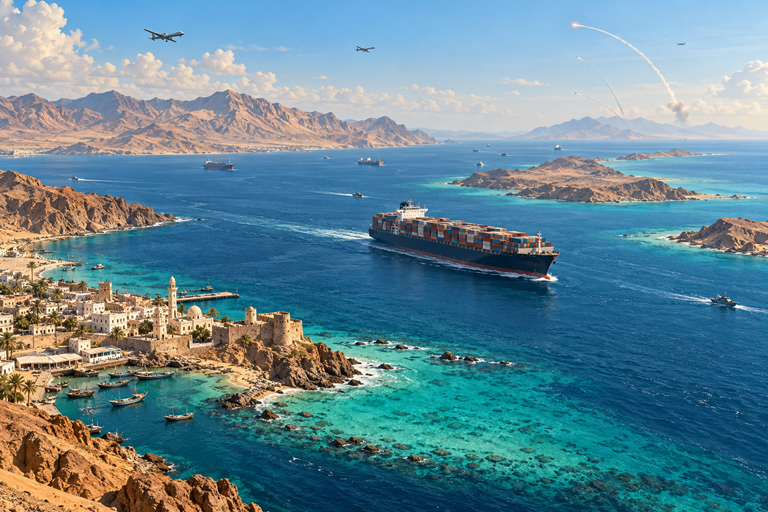
The war also disrupted trade routes through the Strait of Hormuz, damaging both Iranian exports and imports. Iran struggled to import grain, fuel components, industrial materials, and essential goods.
Economic hardship will likely create serious long-term social consequences, such as rising poverty, youth unemployment, growing public anger and declining middle-class stability. At the same time, prolonged economic pressure may increase internal political fragmentation within the Iranian system.
Political and Strategic Future of Iran
The deaths of senior civilian leaders created deep uncertainty about Iran’s political future. The assassination of Supreme Leader Ali Khamenei was particularly historic because he had dominated Iranian politics for decades. The rise of Mojtaba Khamenei as successor created further controversy inside Iran. Some factions may resist hereditary-style succession within the Islamic Republic.
Iran has drawn lessons from the war that may lead it to reshape the state and strengthen its military, civilian, and political institutions. In the years ahead, it may seek to consolidate control in several key areas, including, greater militarisation under the IRGC, fragmentation between competing factions, gradual reform pressure from society, intensified nationalism and authoritarianism and prolonged economic isolation.
The war also weakened Iran’s regional influence. Proxy networks such as Hezbollah and allied militias became harder to supply because damage to Iranian logistics infrastructure disrupted support routes. However, Iran still retains important strengths, including a large population, strategic geography, ideological networks, energy resources, asymmetric warfare capabilities, and foreign allies that want it to endure.
This means Iran remains weakened but not defeated.
Conclusion
The 2026 Iran war caused catastrophic damage to Iran’s military, political leadership, economy, and strategic infrastructure. Thousands of soldiers, IRGC personnel, intelligence officers, and senior leaders were killed. Missile sites, drone facilities, naval infrastructure, nuclear facilities, and industrial centres suffered severe destruction.
Yet the war also transformed Iran rather than eliminating it. Tehran adapted by shifting toward decentralised warfare, asymmetric tactics, underground military infrastructure, and strategic economic leverage through the Strait of Hormuz.
The long-term impact on Iran will likely include economic hardship, political instability, military restructuring, and deeper hostility toward the United States and Israel. At the same time, the conflict demonstrated that even a heavily damaged state can continue resisting if it retains strategic geography, ideological cohesion, and asymmetric capabilities.
The future of Iran after the war remains uncertain. What is clear, however, is that the consequences of the conflict will shape the Middle East, global energy markets, and international security for many years to come.