An Exclusive Interview with a Former Member of Hamas Interior Ministry, Gaza
Summary:
The war in Gaza has devastated the lives of all Gazans, including those who are victims of Hamas and strongly oppose the group. Hundreds of people have demonstrated in Gaza’s streets against Hamas’s brutal rule, while reports have documented the torture and execution of those who resisted. Some protesters were reportedly shot on camera, and people accused of stealing aid for their families were also targeted after Hamas seized aid trucks and diverted supplies to its fighters rather than Gaza’s civilians.
During the war, several groups in Gaza not only opposed Hamas but also collaborated with the IDF in an effort to remove it from the Strip. Hamas branded these groups as traitors and publicly executed many captured members. Not all Gazans should be equated with Hamas; many may oppose Israel while also rejecting Hamas. Many people in Gaza continue to cooperate with Israeli intelligence, providing valuable information about the locations of Hamas members who participated in the October 7 attacks.
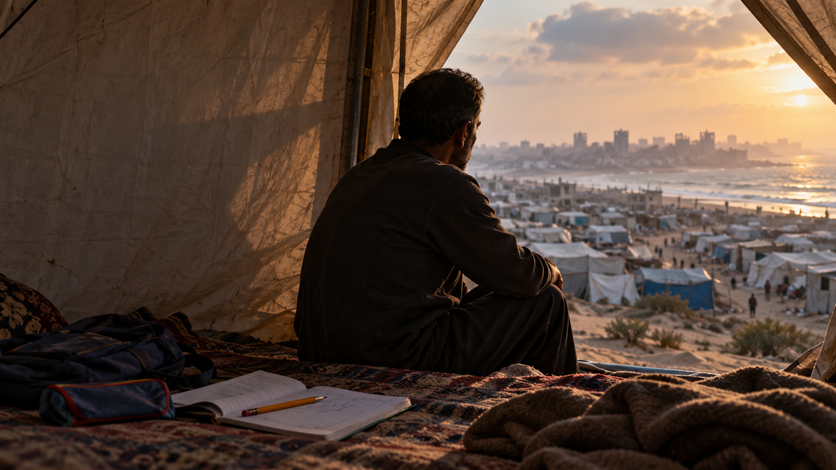
Some former employees of Hamas run ministries later came to realise the group as ruthless, distanced themselves from it, and opposed it whenever possible. I was contacted by one such person and decided to interview him to show that Hamas’s opponents should not automatically be labelled traitors, and that international media and audiences should take their stories and experiences seriously. Below is a detailed, exclusive interview with a man from Gaza who says he endured severe torture by Hamas and lost sight in one eye. He served as a security officer with Hamas’s Interior Ministry at the Rafah border before becoming a teacher with the Ministry of Education. He now lives in a tent in the Al-Mawasi camp.
Before conducting the interview, I contacted him to verify his identity, assess whether his account was based on first-hand experience, and determine its relevance. After questioning him carefully and cross-checking his claims and information, I concluded that he was credible and decided to proceed with the interview.
We discussed life in Gaza before Hamas took power in 2005, including the periods under the PLO and Israeli administration. We also covered Gaza’s education system, recruitment practices, the indoctrination of children, and their use as human shields. He spoke about Hamas’s October 7 attacks, life after Israel’s military response, and the international media’s limited understanding of events, which he said often led outlets to repeat Hamas’s claims. He also disclosed striking details about Hamas casualties, including women who died in combat against the IDF. He also addressed claims that Hamas stole aid, allegations that Israel committed genocide, and the prospects for peace with Israel.
Because he does not speak English, he translated his answers from Arabic before sending them to me. The translation may contain errors, but I have corrected them as carefully as possible.
The interview was conducted over three consecutive days.